My Journey: Higher Education in the Land of Opportunity by Dean Siamack Shojai
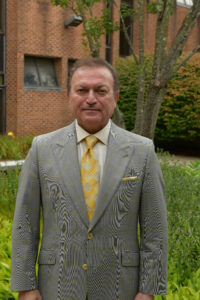 This is the second time that I have the honor and privilege of serving college students in Connecticut. First, I served as Dean of the School of Business at Central Connecticut State University from 2007 to 2014. My first experience with U.S. higher education began in 1978, when Iona College admitted me to its Master of Business Administration program. Sister Rita was my academic advisor and selflessly assisted me and other students in navigating the relatively calm waters of the MBA program. Fordham University provided me with the opportunity to take two doctoral courses in the Spring of 1980, while I still had a full load to complete my MBA program at Iona. Father Dowling, the Chairperson of the Economics Program, taught me mathematics for economists. He accepted me into the doctoral program in economics, contingent upon passing the comprehensive examination for the Master’s degree in Economics. Four years later, I received my doctoral degree from Fordham and was appointed as a visiting Assistant Professor of Economics at Fordham.
Dr. Dominick Salvatore and the late Dr. Gerald Quinn, Associate Academic Vice President, shaped my career in academia with their warm and caring mentorship. I took a couple of courses with Dominick, and he mentored me on my dissertation, which focused on optimal oil production in OPEC countries. Dr. Quinn graciously served as the Fordham Liaison with my immigration attorney and signed numerous documents during the two years I spent as an assistant professor at Fordham. During that time, I received my permanent residency in the U.S. The Quinn Library at Fordham University’s Lincoln Center Campus is named after a larger-than-life, magnanimous, and dedicated person with a huge heart and a love for serving Fordham students. Iona College (now University) instilled in me its core values of service, justice, inclusivity, excellence in education, and global citizenship, all within the Edmund Rice tradition. These values were complemented and reinforced in me by Fordham’s Jesuit tradition and its emphasis on cura personalis, wisdom and learning, faith and justice, community and diversity, and service to the human family.
I came to America in 1978, welcomed by my uncle, Dr. Ezat Shojai, and his lovely wife, Margie. I promised my father that after receiving my doctoral degree, I would return to my birthplace, Iran. However, the land of opportunity had a different professional odyssey and life planned for my wife, Roya, and me, a 48-year marriage. Roya completed her interrupted bachelor’s degree in computer information systems while taking advantage of the free-tuition opportunity at Fordham during my full-time teaching tenure at the university. She showed me how a mother of three sons and a dedicated spouse can balance her busy family responsibilities and earn her master’s degree in Special Education from Manhattan College. During her studies at Manhattan College, I learned what a daunting task it is for experienced individuals to return to college and earn a degree. I became a professional and respected professor of economics and finance from 1984 to 1999, teaching at Fordham, Lafayette College, and Manhattan College, where I rose through the ranks from Assistant Professor to full Professor and Department Chair.
My administrative duties commenced with my appointment as assistant dean, followed by a year later as associate dean at Marist College. There, I had the honor of administering the core values of excellence in education, commitment to service, leadership, innovation, and global perspective as an administrator. Later, at the State University of New York at Plattsburgh, I felt the heavy responsibilities of serving as dean of the School of Business and facilitating my colleagues’ achievement of accreditation for the business programs by the Association to Advance Collegiate Schools of Business (AACSB). Six years later, Central Connecticut State University honored me with the same opportunity to assist my colleagues in earning the AACSB accreditation, making it the first state university in Connecticut to achieve this distinction.
I firmly believe that higher education is a “public good.” The lifelong benefits of earning a college degree not only directly reward the hard-working and talented recipients but also give back to the larger community several times more than the investment of time and funds by college graduates.
At Central and later for eleven years at William Paterson University, I witnessed thousands of eager and determined students starting as freshmen and growing into sophisticated, well-educated, and ready-to-serve graduates. I shook hundreds of hands of graduates at the commencement exercises, and the joy of seeing hundreds of marching graduates is indescribable. American public universities, such as Western Connecticut State University, divorced from any denomination, with relatively small endowed funds, pursue comparable values and mission as many prosperous private institutions of higher education. They instill excellence, curiosity, dialogue, engagement, and respect in millions of college students in the U.S. The opportunities provided by public colleges and universities in this land of opportunity are not matched anywhere else on our planet.
I am grateful to my colleagues and the leadership of WestCon for providing me with the opportunity to serve as dean and support our students and the state of Connecticut. After spending the past six years in the classroom and enjoying tremendous, joyful days with my three grandchildren —Darren, Mila, and Allara —I am now ready to take on this new role. Together, we will continuously enhance the reputation, quality of education, and our contribution to the larger community at this great institution of higher education in the great land of opportunity.
Read all of our Ancell Making an Impact stories

