Search WCSU
WCSU Essentials
Automatic translation disclaimer
Translation of this page is provided by the third-party Google Translate service. In case of dispute, the original language content should prevail.
La traducción de esta página la proporciona el servicio Google Translate de terceros. En caso de disputa, prevalecerá el contenido del idioma original.
La traduction de cette page est fournie par le service tiers Google Translate. En cas de litige, le contenu de la langue originale prévaudra.


Led to Stay, Called to Teach: Jimmie Elizabeth “Liz” Timmons Nkonoki-Ward’s WestConn Story
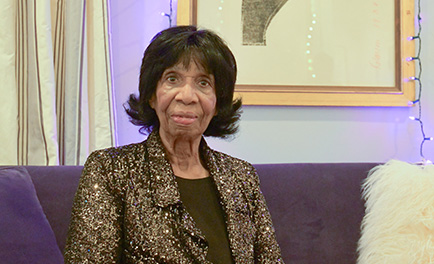
When Jimmie Elizabeth “Liz” Timmons arrived at Danbury State Teachers College in 1953, the campus was far simpler than the WestConn students know today.
The Visual and Performing Arts Center did not yet exist. Music students rehearsed wherever they could find space in classrooms, hallways, borrowed rooms, learning to create beauty without the benefit of dedicated facilities. What the college lacked in space, however, it made up for in possibilities.
At just 17 years old, Liz performed on the Carnegie stage. Her talent was noticed, and she followed the path of many great vocal artists. She crossed paths with Marian Anderson, who performed a wide range of music, from opera to spirituals. Anderson performed with renowned orchestras in major concert and recital venues throughout the United States and Europe between 1925 and 1965. Liz commented that there were several times in her life that she was in the presence of, or just followed, where Anderson had performed. For a young woman, this was an icon of inspiration that motivated her to continue her academic journey. She did not realize it at the time, but she was the first student of color accepted into the Music Department at what is now Western Connecticut State University. She entered a program where few looked like her and fewer paths had been cleared before her. At the time, she could not have known how deeply that moment would shape her life.
Music became a bridge between people, cultures, and callings.
Raised in a family rooted in faith, discipline, and service, Liz believed deeply in using one’s gifts. Yet, she has often reflected that she was not certain teaching was her calling. Early in her studies, she considered leaving the program altogether. When she shared her uncertainty with the Department Chair, she was reminded of something she had not fully considered: she was the only student of color in the Music Department.
She stayed.
Looking back now, Liz sees that moment as one of many instances, over her ninety years, when she was gently led rather than pushed. What felt like a coincidence later revealed itself as a purpose.
One such turning point came through what seemed like a simple decision: enrolling in a six-week, off-campus music course offered through the college. That experience introduced her to the pipe organ, a discovery that would anchor both her faith and her artistry. For more than 55 years, Liz served as the organist at St. Joseph’s Church (later Divine Providence Parish), offering her gifts week after week, marking life’s most sacred moments in music. She continued in this role until the age of 88.
At Danbury State Teachers College, Liz earned her Bachelor of Science in Music Education in 1958, developing not only technical mastery but a deep understanding of how music could dissolve barriers. Even without a formal arts center, music created shared spaces, where listening mattered, collaboration was required, and difference could become harmony.
Those lessons followed her into the classroom.
As an educator, Liz taught students from many backgrounds, cultures, and lived experiences. Teaching, she often said, “opened the windows of the world.” It allowed students to see beyond themselves and allowed her to continue learning alongside them. Her classrooms were grounded in encouragement, high expectations, and respect.
Years later, Liz returned to her alma mater, earning her Master’s degree in Elementary Education from Western Connecticut State University in 1977. By then, the pattern of her life was becoming clear. Music had led to teaching. Teaching had led to service. And service had led to impact.
In 1987, Liz was named Hartford’s Teacher of the Year, with her work featured in Essence Magazine. Yet accolades were never her measure of success. Her life’s mission, she says, has been to trust the connections and coincidences, and to pay forward the encouragement she received, especially during moments when staying required courage.
Her story is also part of a larger WestConn legacy. Over generations, Western Connecticut State University has become a standard-bearer for producing exceptional educators, with alumni regularly recognized as Teachers of the Year at the district, state, and national levels. That tradition stretches from pioneers like Liz to today’s graduates leading classrooms across the country.
For WestConn, Liz’s story is more than history; it is heritage.
Before there was a Visual and Performing Arts Center, there was a young woman making music wherever she could. Before excellence in teaching became a hallmark of the institution, there were students like Liz, choosing to stay, choosing to serve, and trusting that their presence mattered.
Through faith, music, and education, Elizabeth “Liz” Timmons Nkonoki-Ward transformed coincidence into a calling and calling into a lifetime of impact.