Dr. Kristin Giamanco
Assistant Professor
Member of National Association of Advisors for the Health Professions (NEAAHP)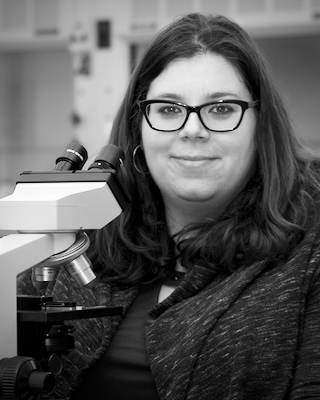
Science Building 205
GiamancoK@wcsu.edu
203-837-8968
BIOGRAPHY
Kristin Giamanco is a neuroscientist and is interested in understanding how progenitor cells in the brain divide. She earned a B.A. in Biology with minors in Mathematics and Chemistry from Bryn Mawr College. She then went on to complete her Ph.D. in Neuroscience and Physiology at the State University of New York Upstate Medical University. Prior to starting at Western Connecticut State University, Kristin was a postdoctoral fellow at the Brain and Mind Research Institute within Weill Cornell Medical College. The National Institute of Neurological Disorders and Stroke funded the work Kristin conducted at Weill Cornell.
RESEARCH INTERESTS
The Giamanco lab is focused on understanding how neural progenitors in the developing mouse brain divide. These neural progenitors will ultimately give rise to the mature neurons that populate the brain and they exhibit asymmetric and symmetric patterns of division. A major interest of the Giamanco lab is to understand how progenitors undergo these specific division events and to identify the molecules that underlie these intricate processes. In collaboration with colleagues at Weill Cornell Medical College, Dr. Giamanco is investigating the role of phosphorylation of specific cell cycle proteins in the modulation of neural progenitor division.
SURF PRIMARY SETTING
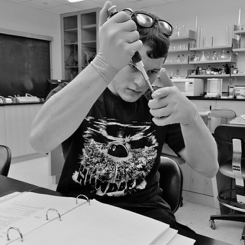
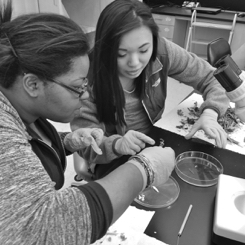
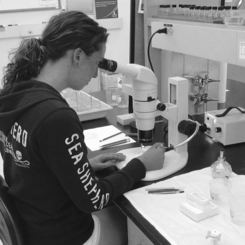
Laboratory work.
SKILLS TO BE ACQUIRED DURING FELLOWSHIP
Generation of primary cultures; immunocytochemistry; microscopy; cell culture; caring for and using mice; data collection and analysis; discussion of primary literature; presentation of data in written and oral formats.
SKILLS REQUIRED TO BE ELIGIBLE FOR A FELLOWSHIP IN THIS LAB
Excellent oral and written communication; attention to detail and excellent organizational skills; willingness to work with mice; familiarity with Microsoft Word, Excel, and PowerPoint.
FELLOWSHIP DATES
Contact faculty member for availability.
|
|
|
|
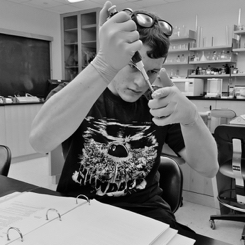
Former SURF Fellows | |||||
|
|
|
|
|
|
|
 |
|